Katie Cardwell helps students find their future as Thompson’s career coach
By Sarah Owens
Katie Cardwell has spent years helping Thompson High School students think about life after graduation, but in summer of 2025, she reached an important milestone in her own career journey.
Cardwell, THS’ career coach, earned the title of Certified School Career Development Advisor from the National Career Development Association. The certification is designed for professionals who guide students through career exploration, postsecondary planning, and workforce readiness.
For Cardwell, the certification was about strengthening the work she already loves. “I was really excited about the opportunity to really focus in on actual career education,” Cardwell says. “This certification was just an opportunity for me to deep dive more into career services and really bring back the knowledge to alabaster city schools and the students here.”
Cardwell knows first-hand how important career education can be, as her own career path was not a straight line. “My dad, when I was  going into college was like, ‘You have to major in business. You have to make money,’” Carwell says. “And I was like, ‘I just want to be a teacher.’”
Halfway through her time at Appalachian State University, Calwell realized she hated advertising and was still drawn to teaching, but switching to an education track would have delayed graduation, so she instead earned a bachelor’s degree in recreation management. A professor then encouraged her to pursue an advanced degree, which led her to complete a master’s in higher education and student affairs at Florida State University. Later, after becoming a career coach, she earned a second master’s degree in school counseling from the University of Montevallo.
That winding journey, she says, helps her better connect with students who are still figuring out their own futures. “It’s really fun too, because I feel like my personal journey in my career has also helped me be more encouraging and passionate about students figuring out what they want to do, figuring out what interests them, figuring out what they’re good at, and bringing that all together,” she says.
Cardwell first served as Thompson’s career coach from 2016 to 2018 before stepping away to stay home with her children. She returned to the role in 2024. “I don’t think there is another job that I would have come back to work for,” Cardwell says. “I really loved being a stay-at- home mom, but this job is, I think, really is in my element.”
Because Cardwell lives in Alabaster and her children attend Alabaster schools, the work feels deeply personal. “It’s not just a job for me. It’s personal, because I care so much about our community as a whole,” she says.
As career coach, Cardwell works with students interested in entering the workforce, joining technical programs, or exploring career pathways. She helps students complete interest assessments, connects them with internships, and coordinates events like mock interviews with local business leaders. Students who then decide they are interested in college work with the school’s college counselor.
One of the biggest parts of Cardwell’s role is helping students understand that career exploration is a process, not a one-time conversation. “My role is helping students figure out what they want to do, and that is an ongoing role. That is not something where we can figure that out in one meeting,” Cardwell says. “It really focuses on building relationships with students, figuring out what students are interested in, and providing them with those opportunities.”
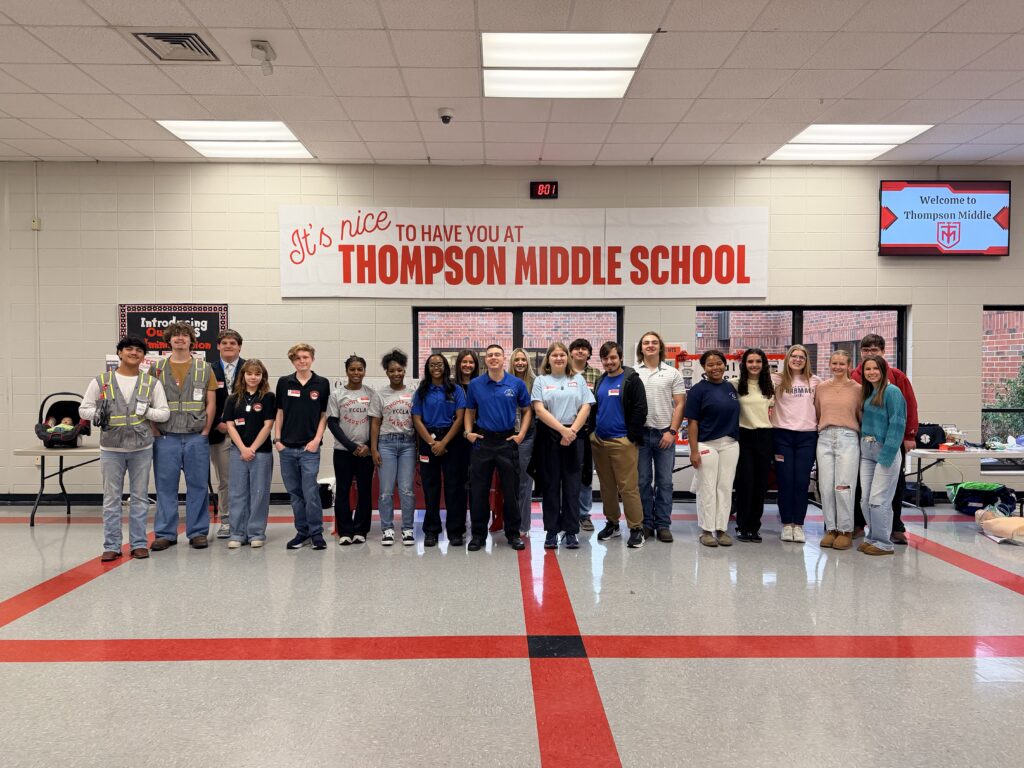
 She also spends time introducing younger students to careers before they reach high school. Cardwell works with elementary, intermediate, and middle school students across Alabaster City Schools, exposing them to careers, interest inventories, and career academies long before they choose classes at THS. “I feel like the earlier we can start talking about it, the better,” Cardwell says. “They don’t have to have it all figured out, obviously, but as long as they can just kind of start thinking about opportunities.”
That early exposure matters, especially as Caldwell says younger students increasingly dream of pursuing careers with potentially slim success margins, like influencers, YouTubers, professional athletes, or video game designers. “I try to relate them to careers that are similar,” she says. “I’m not trying to crush their dreams.”
So, for students dreaming of being a star athlete, Cardwell might suggest careers in sports, like coaching or physical therapy. For influencers and YouTubers, maybe marketing, communications, or sales. For video game designers, graphic design is a great alternative.
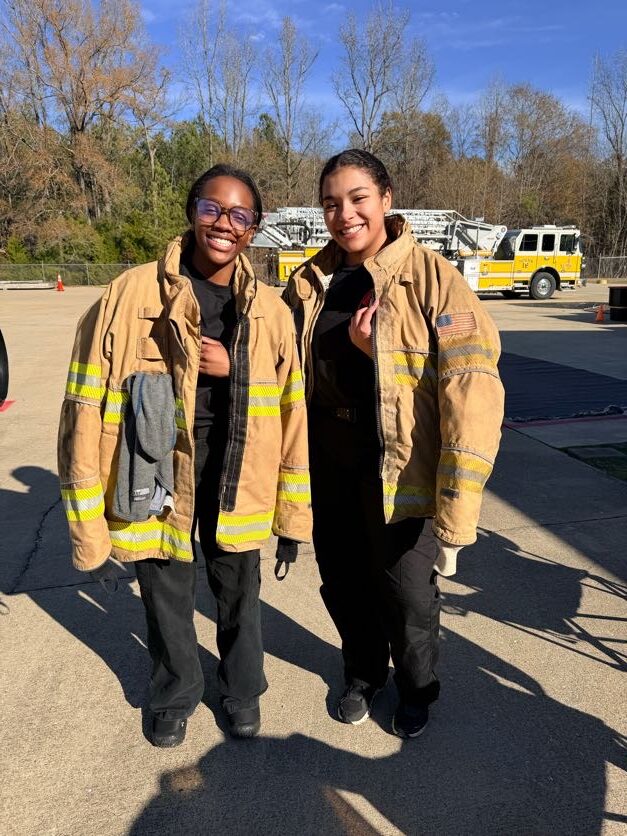
Aside from the early concept introductions, Cardwell says one of the district’s greatest strengths is the number of opportunities available to students. She pointed to the Health Science Academy, Thompson’s largest academy with more than 600 students, as one example. The academy allows students to gain health-related certifications and real-world experience with internships in physical therapy, radiology, sports medicine, dental, and nursing.
THS offers a wide variety of career and technical education opportunities for students, including academies in business and marketing, computer science, engineering, education and training, health sciences, TV and film, human services, government and public administration, law enforcement, and fine arts. “The fact that our school district is so supportive of students futures, I think, is an incredible asset to Alabaster,” she says.
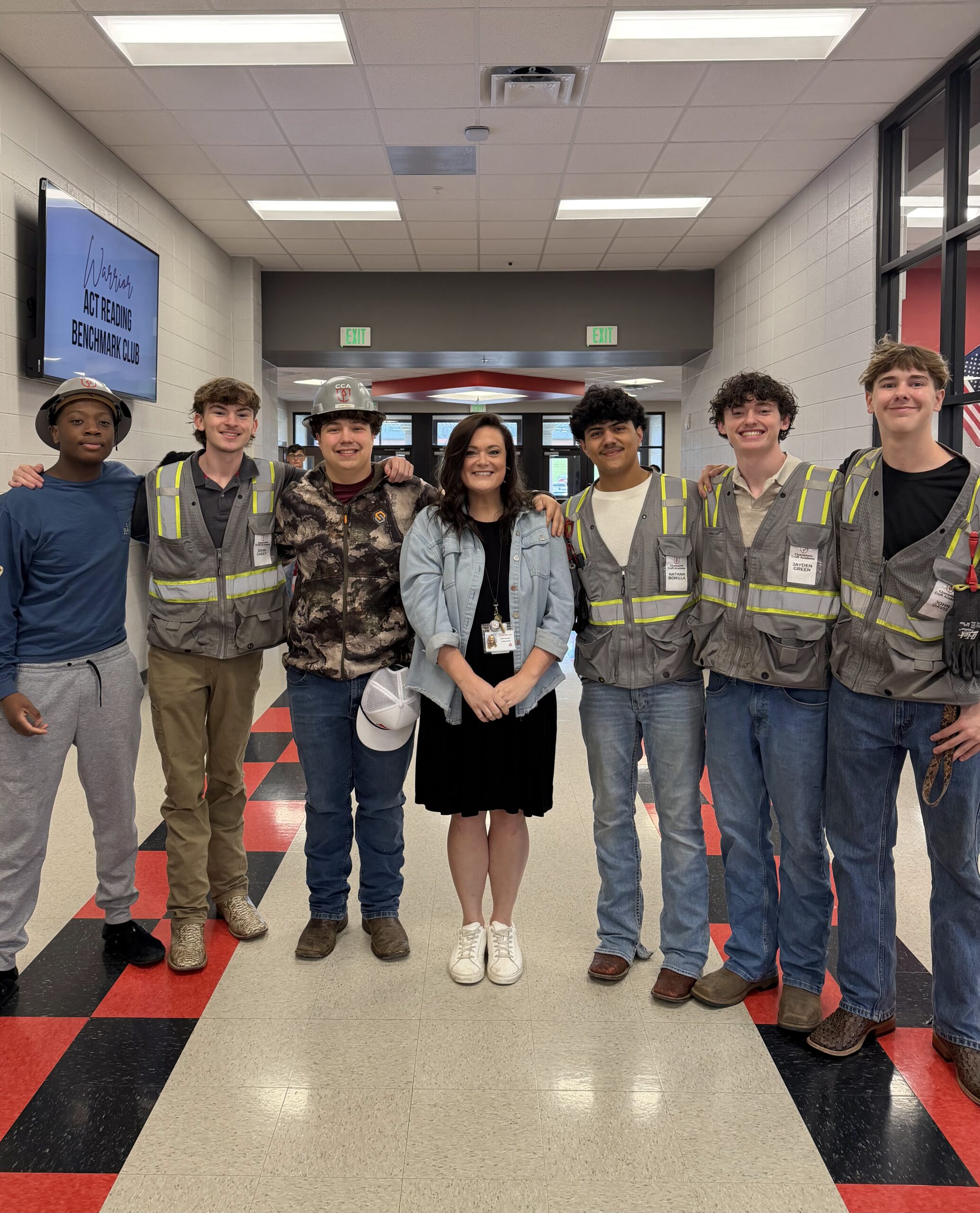
Cardwell also works closely with the Champions Craft Academy, which provides hands-on training for students interested in skills trades and construction. “Just knowing that you don’t have to be miserable in a career either,” Cardwell says. “There’s a way to figure out which career matches with stuff that you’re good at, versus just forcing yourself to go through it so you can do that career. So, I’m really passionate about helping students align those interests, skills and work values.”
Ultimately, Cardwell says her goal is simple: to help students feel supported as they figure out what comes next. “No matter what they want to do after they graduate, whether it’s going to work, whatever they do, I want to be their biggest cheerleader,” she says. “And I want to help them get to where they want to go.”
Interviews with city councilors about entering the workforce
Kerri Pate, City Council
What was your first job as a teen or out of high school?
My first job was babysitting, which I did a good bit while in high school. Being the oldest of four, this was my world! I also worked after school for a dry cleaner and an orthodontist when I didn’t have A dance.
What advice do you have for upcoming grads soon to enter the workforce?
Plan early so you can enjoy things later in life. To the young ladies, I would say choose a profession and career path that empowers you to be there for your family and values you professionally as well.
Mike Myers, City Council
What was your first job as a teen or out of high school?
I was a bag boy at Winn-Dixie at age of 15. That was my first job paying $4.25 an hour in my hometown of Millbrook, Alabama.
What advice do you have for upcoming grads soon to enter the workforce?
A strong work ethic, a willingness to learn new things, and a positive attitude will take you farther in your career than you can imagine.
Stacy Rakestraw, City Council
What was your first job as a teen or out of high school?
As a teen—babysitting and Burger King.
What advice do you have for upcoming grads soon to enter the workforce?
Look for a company with a solid background and strong values and make sure you bring a good work ethic.
Jamia James, City Council
What was your first job as a teen or out of high school?
My first job in high school was as a lifeguard.
What advice do you have for upcoming grads soon to enter the workforce?
Be patient and stay the course. You may not get hired after that first interview. Just stay consistent, have faith, and never give up.
Adam Moseley, Board of Education President
What was your first meaningful job?
One of my first jobs while I was in college was at WAKA in Montgomery. What I learned from the people there was more valuable than what I was paid. I learned how to do just about every job there is to be done at a television station, and I learned the value of hard work.
Derek Henderson, Board of Education Member
What was your first meaningful job?
My first full-time job was right after graduation from Birmingham-Southern with the State Farm Regional Office as an underwriting trainee. What prepared me for that opportunity was working at Griffin Wheel Company in Bessemer where they made iron railroad wheels. It was my first opportunity to wear a white hardhat, do grunt work, and answer to almost everyone that gave me orders (anyone not wearing a white hard hat)!