Master Gardner and retired OBGYN Dr. Richard Cybulsky to speak at the Albert L Scott Library in September.
By Lee Hurley
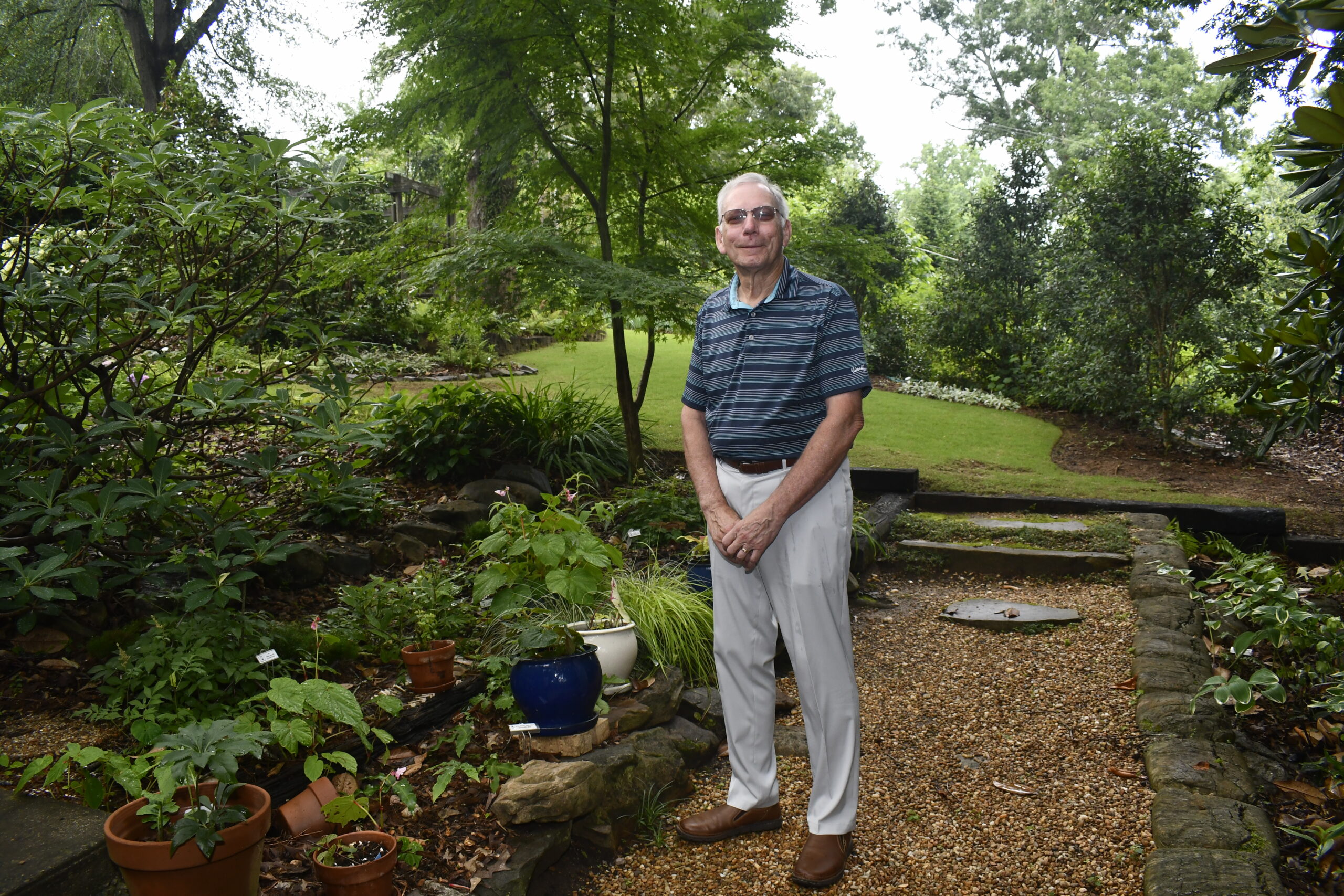
Photo by Jordan Wald
Retired obstetrician-gynecologist Dr. Richard Cybulsky has spent a lifetime welcoming new beginnings—first in the delivery room and now in the garden. After a 37-year career as an OBGYN at Brookwood Hospital, the Winnipeg-raised physician who grew up on a farm, embraced a second act becoming a Master Gardener and champion for native plants and pollinators in Central Alabama.
Cybulsky’s path to Alabama began with wanderlust. Trained in Canada, he sought warmer weather and new horizons, choosing Birmingham in 1977. He settled in Vestavia Hills, raised a family, and built a respected medical career marked by long nights, weekend calls, and the profound privilege of helping bring life into the world. Gardening—first a modest pastime of roses, tomatoes, and seasonal color—became more intense as his retirement came into view. Then he dove in.
He completed the Alabama Cooperative Extension’s Master Gardener program, a 14-week course that, as he puts it, “teaches you how much there still is to learn.” Guided by mentors and buoyed by volunteer service at the Birmingham Botanical Gardens, he pursued advanced study that sharpened his focus on three interconnected interests: native plants, shade gardening, and butterflies. The draw is both scientific and soulful: native plants anchor ecosystems, feed birds, and sustain pollinators; shade gardening turns tree-covered Birmingham lots into layered havens; and butterflies offer a living measure of a yard’s health.
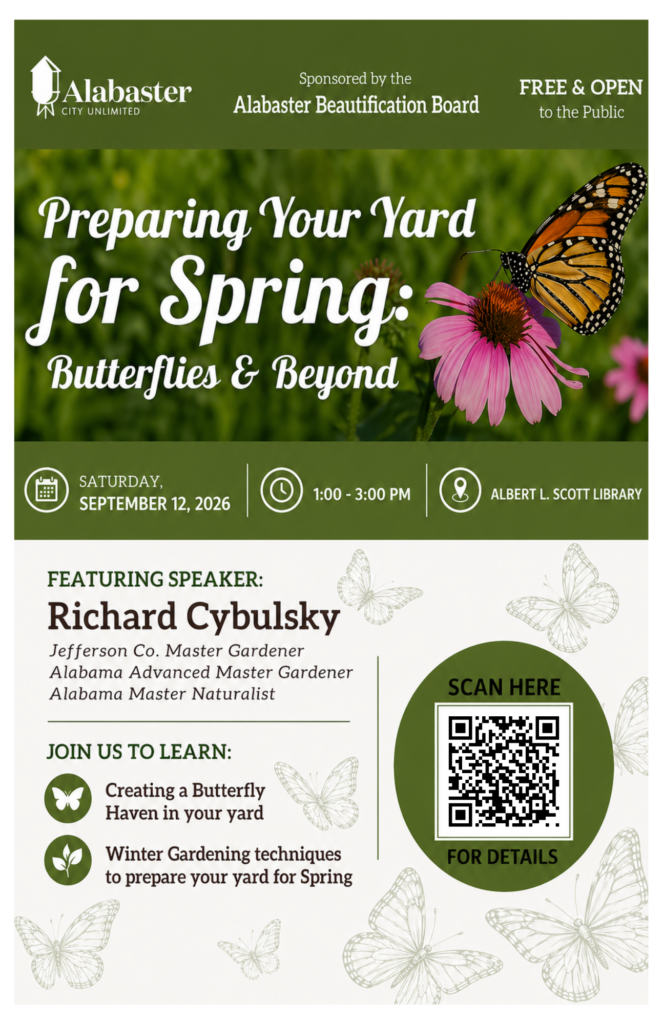
At the invitation of the Alabaster Beautification Board, Dr. Cybulsky will speak at the Albert L. Scott Library on Saturday, September 12, from 1-3 p.m. His two-part program—Creating a Butterfly Haven in Your Yard and Winter Gardening Techniques to Prepare for Spring—offers a roadmap for gardeners of all experience levels.
In the butterfly session, expect down-to-earth guidance: plant the caterpillars’ host plants; choose regionally native species to match local butterfly life cycles; stagger bloom times from early spring through late fall; and leave a little wildness—undisturbed leaf litter and stems—to shelter chrysalides and overwintering insects.
The winter gardening portion flips the script. Rather than seeing winter as dormancy, Cybulsky treats it as strategy season. His message is encouraging: the best spring gardens are made in January.