
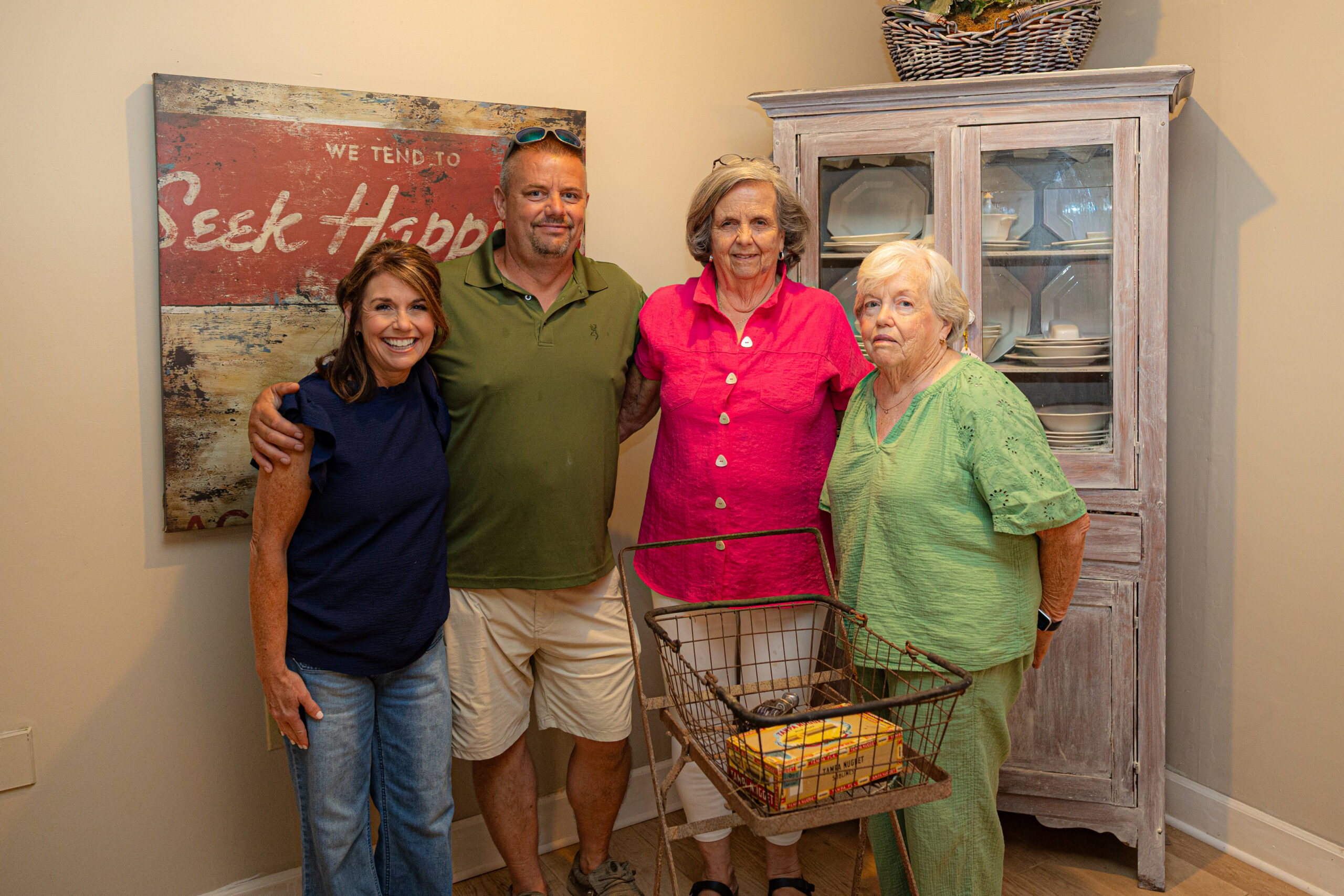
Two sisters remember the family store.
By June Mathews
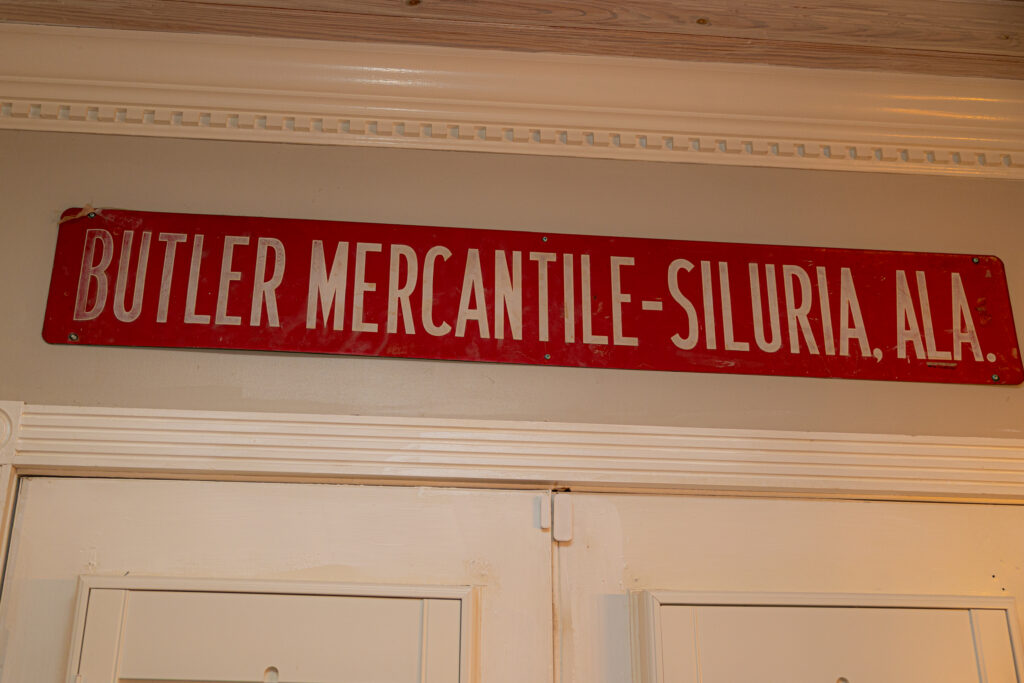
The country store filled with a hodgepodge of merchandise is long gone, the building recently demolished to make way for progress. But Butler Mercantile lives on in the memories that sisters Mary Butler Lee and Martha Butler Waugh have of working in the family business.
Their parents, Robert and Frances Butler, owned the store for nearly 20 years, and the long-thriving business became not just a means of supporting the family, but a hub of the community, a convenient place to shop for just about anything, and a source of help for people in need of food, friendship, or just a word of encouragement.
But owning a store like Butler Mercantile wasn’t a random choice. It was a youngster’s dream that years later turned into reality for him and his family. And it took the Butlers, their daughters, and some faithful employees to make it work.
Butler’s journey began, however, on a sad note. “His dad died when he was 13 years old, and he had to quit school to go to work because he was the only child,” says Lee, the elder daughter. “He was too young to work in the Siluria mill, but his older cousin Jeff was working at the store there. Since Jeff was 16, he went to work at the mill, and Daddy went to work for Mr. Walker in the store.”
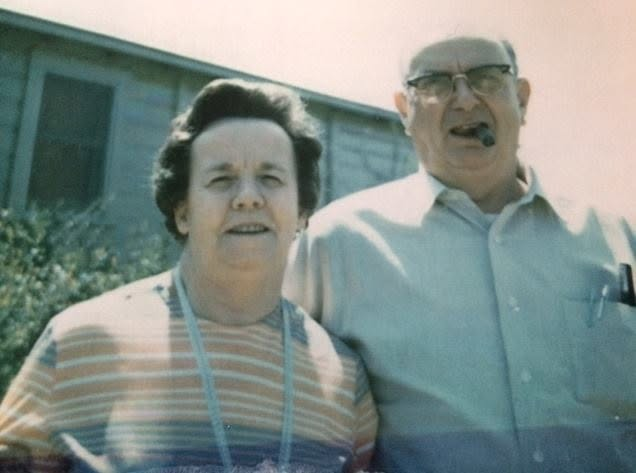
Not only was Butler grateful for the opportunity, but it was a great fit. “It got into his blood,” says younger daughter Waugh. “He developed a love for the business, and with his mathematical mind, he was very good with numbers and managing money.”
Soon after the Butlers married, they had a store in Dogwood, and later, one in Montevallo. He then served a stint in the military, and when he got back home, he became a steamfitter for a while. But getting back into the store business was never far from his mind.
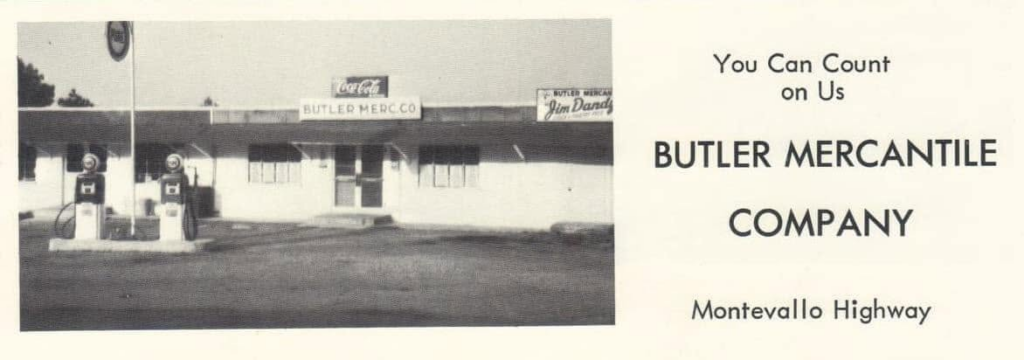
It finally happened in 1958 when the Butlers started building a store at the intersection of Highway 119 and Butler Road. They opened Butler Mercantile the following year. The building was 4,300 square feet with a full basement, bringing the total footage to 8,600 square feet. “The flooring came from the rock elementary school at Siluria,” says Lee. “When they tore it down, Daddy got the old hardwood floors for the store.”
Waugh particularly remembers the dark stain on the floor that came from being swept with an oily compound to keep dust down in the school. One of her early morning chores was mopping it. “I had a big bucket and a big mop, so it didn’t take long,” she says. “But it was a hard job.”
Butler first depended on cabinets and shelving he built himself to put the groceries on, but he later bought metal bins and fixtures for displaying merchandise. Waugh accompanied her dad to Birmingham to purchase his first load of groceries. “We went to a wholesaler on Morris Avenue and bought 50 dollars worth of groceries to start stocking the shelves,” she says. “You had to buy a certain amount before they would deliver. Daddy put all the money back into stock, so it wasn’t long before they were delivering to us.”
The sisters were charged with unpacking, marking, and putting up stock. “We would come home from school, and the stockroom would be full up to the ceiling. It would probably take us two afternoons to put up that stock,” says Waugh. “Dad didn’t put up stock because he had two girls to do it.”
Their dad, says Lee, mostly stayed at the front of the store near the cash register to serve customers there. “Some people just came in to talk. Daddy and mother were raised here, and they knew everybody,” she says. “And he would also cut meat. There were two big meat cases, and he had slab bacon that he’d cut with the rind on. People would come from all over to get that bacon. He cut a lot of pork loins, too.”
Another big seller, says Waugh, was hoop cheese with black rind that came in big wooden boxes. Their artistic mother would often save the boxes and paint them. The one-stop store also carried dry goods, hardware, plumbing and electrical supplies, feed, and a variety of other items. Best of all—at least as far as the younger customers were concerned—the store had a penny candy counter.
The mercantile also carried popular soft drinks, including Coca-Cola, Pepsi, and RC Cola, in glass bottles. And that, according to the Butler sisters, was the problem with soft drinks: sorting and organizing the glass bottles customers had returned to the store to redeem their deposits. “It was a mess,” says Lee. “We would spend hours doing that and then have 40 or 50 crates stacked and waiting to be picked up.”
But whether it was soft drinks or hardware, Butler Mercantile customers rarely left without finding what they came to purchase. “Pop stocked just about anything people would need,” says Waugh. “And if anybody came in and asked for something we didn’t have,” says Lee, “Daddy would get it.”
Though the work was often hard, and their responsibilities at the store must have seemed burdensome to two young girls, the Butler sisters came to appreciate the lessons they learned there. But despite their father’s wishes that they would one day run it, they chose other careers—Lee became a nurse and Waugh, a teacher.
Looking back, it’s the friends they made at the store, and the memories of working with their parents, that they appreciate most. “We were just all together,” says Lee, “and we looked forward to everybody coming in.” Her sister agrees, “We were together all the time, so it was good.”